#20 Describe some common aesthetic/formal qualities, content, and conceptual threads in “snapshot” photography.
I love the spontaneity in snapshot photography. It doesn’t feel manipulated or set up, its raw and fresh. I think that’s what makes it so strong conceptually as well as aesthetically. Its content feels real therefore it’s stronger and more appealing, people can relate to it more than a studio set-up.
#21 Brainstorms! (In an effort to expand, improve, push your thesis projects further, pick 5 of the following to discuss.)
a. Ideas sometimes grow out of irritation. What is a negative thought you are having about your project? What is the opposite of this negative thought? How could you implement a change in your project so that this negative thought will subside?
Negatively I feel like I’m just decorating old work and would love to shoot new work but conceptually this weather does not fit with my piece so I’m kind of stuck in boredom and feel like I’m making myself work on it at times instead of wanting to dig deeper into the project. Opposite of this thought would be that I should look further back into photographs and embrace that they were taken in the past and maybe find older images I have forgotten about to use or go through Grandma’s millions of photos. I think doing this would help me get back into the project.
d. Type twenty words or phrases that relate to your project.
Home. Nature. Life. Family. Friendship. Beautiful. Flowers. Lessons. Words. Sayings. Folky. Old. Snapshots. Keepsake. Scrapbook. Book. Friendly. Light. Sunny. Antique.
e. At the deepest core, describe why you like this project. Dig deep!
It reminds me of my childhood and allows me to revisit that time in my life and relate back to a book that I grew up with and put my own impressions on it. Also, it allows me to go back into pictures and design a layout to make them work with, add in type & textures. This aspect of the project relates to my interests not only in photography but also graphic design.
f. Expand your project. If time, money, materials, etc would not affect you, how would you expand your project?
I would love to go on location in various place that have sunshine! Unfortunately Michigan sucks right now for the look and feel I am going for in my images so I’m forced to use past shot pieces which I do not want to do. For my project I envision fields, flowers, forests, lakes etc.
g. Contract your project. What would it boil down to if squeezed and contracted to its simplest form?
Life’s beauties and lessons.
Wednesday, March 16, 2011

photographer presentation 4

Koto Bolofo was born in South Africa in 1959 and raised in Great Britain. Bolofo has photographed and made short films for magazines such as Vogue, Vanity Fair & GQ. He has created advertising campaigns for companies including Hermes, Louis Vuitton and Dom Perigon. He is said to be one of fashions most individual and iconic photographers. When asked about his approach and process of picture taking Bolofo replied, "Before even beginning to take picture I find an idea in one's head and think it over in 'motion' like film directors. My brain searches for characters in the labyrinths of my mind. Once that is established the goal with my camera is to achieve a timeless photograph which has an emotional quality to ones eye and not produce a piece of 'throw away art'."


Richard Avedon was an American photographer whose portrait photographs 'helped define America's image of style, beauty and culture for the last half-century', as quoted from the New York Times. He also photographed patients of mental hospitals, the Civil Rights Movement, Protesters of the Vietnam War and later the fall of the Berlin Wall. Born May 15, 1923 in NYC to a Jewish-Russian family. Avedon started his photography career at a department store and was quickly discovered by Alexey Brodovitch at Harper's Bazaar. In '46 Avedon set up his own studio and began providing images for magazines including Vogue & Life. Avedon did not conform to the standard technique of taking fashion photographs, where models stood emotionless and seemingly indifferent to the camer. Instead, Avedon showed models full of emotion, smiling, laughing, and many times, in action. Avedon was always interested in how portraiture captures the personality and soul of its subject. As his reputation as a photographer became widely known, he brought in many famous faces to his studio and photographed them with a large-format 8x10 view camera. his portraits were easily distinguished by their minimalist style, where the person is looking squarely at the camera.
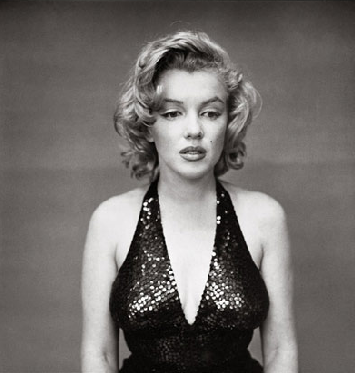


Arnold Newman was born March 3, 1918 in NYC. An American photographer noted for his 'environmental portraits' of artists and politicians. Newman attended the University of Miami studying painting and drawing with an introduction to Modernism. Unable to afford continuing after two years, he moved to Philly to work for a studio making 49cent portraits. His time there taught him the importance of interacting with his subjects and allowed him to develop his technique. Newman found his vision in the empathy he felt for artists and their work. Although he photographed many personalities such as JFK, Picasso, Marilyn Monroe, Mikey Mantle & Audrey Hepburn he maintained that even if the subject is not known, or is already forgotten, the photograph itself must still excite and interest the viewer.


Wednesday, March 2, 2011


Thursday, February 24, 2011
Sarah Hinton: Sally Mann
Sarah Hinton: Sally Mann: "Sally Mann was born in 1951 in Lexington, Virginia, where she continues to live and work. She received a BA from Hollins College in 1974, an..."
Richard Misrach, presentation 2

(born in Los Angeles, California in 1949) is an American photographer known for his photographs of human intervention in landscapes. His works are represented in more than fifty major museum collections around the world.
Richard Misrach is one of the most influential and prolific artists of his generation. In the 1970’s, he helped pioneer the renaissance of color photography and large-scale presentation that are widespread practice today. Best known for his ongoing epic series, Desert Cantos, a multi-faceted approach to the study of place and man’s complex relationship to it, he has worked in the landscape for over 40 years. Other notable bodies of work include his documentation of the industrial corridor along the Mississippi River known as Cancer Alley, the sumptuous study of weather, time, color and light in his serial photographs of the Golden Gate, and On the Beach, an aerial perspective of human interaction and isolation. Recent projects mark departures from his work to date. In one series, he has experimented with new advances in digital capture and printing, foregrounding the negative as an end in itself and digitally creating images with astonishing detail and color spectrum. More recently, he built a powerful narrative out of images of graffiti produced in the aftermath of Hurricane Katrina, made with a 4-megapixel pocket camera.
"For most people, the desert defines itself as a place where little happens, except the occasional glimpse of tumbleweed blowing across the sand. There are no movie theaters, coffee shops, malls or cars. There are no visible towns for miles and few noises, except the sound of your own breathing. In Misrach's desert, the land vibrates with underground nuclear testing and the sky illuminates with radiation seeping into the atmosphere, creating fantastic colors at every glance."
"Whether photographing a flooded town, a desert fire, an abandoned nuclear test site or the colors on the horizon emanating from a small town miles away, Richard Misrach draws the viewer into his world through his mastery of color. Ranging from beautiful lakes to secret military bunkers to speed racing on the Utah salt flats, Misrach's work chronicles mans involvement in the desert, while always paying homage to the intrinsic beauty provided by nature. It's through beauty that Misrach's social concerns are most revealed. By pulling the viewer into a glowing light or calm body of water, he presents situations which leave us asking questions about the American desert -- a desert which continues to heal and revive itself regardless of mans actions."
composition:Misrach heavily relies on the horizon line in his works and plays off the ground & clouds off of it, utilizing reflections in water many times. light plays a huge role in every piece.
concept:photographing something not always appealing in a very appealing, beautiful way.
my opinion: I think his work is very beautiful but looking through many of his images at a time they become usual, expected & not very interesting.


Wednesday, February 23, 2011


Monday, February 21, 2011
Blog prompt 19
Analyze your creative process by answering the following questions.
1. How do you ensure that your work is relevant to you?
Make sure you only work on projects that mean something significant to you.
2. How do you ensure that your work is relevant to the contemporary world?
Your piece should be able to communicate in a general way, in a way that everyone can view it and be able to feel connected to it in their own personal way.
3. How do you brainstorm? Do you sketch? Do you use the camera as a brainstorming tool so that you “look” at the world through the frame of the camera and capture bits and pieces of your environment?
I have to write everything down. I have various lists and post its all over my desk. When I have ideas I write them down then revisit them by adding notes and ideas. Once I am ready to shoot or create something I like just going for it and taking lots of pictures or working by trial and error.
4. Do you combine elements of various media? How do you do this? Do you do it physically with printed images or objects? Do you combine elements virtually in the computer?
Typically I will combine elements in the computer but on occasion I love to sit on the floor with various materials and work with physical objects, these thing become pieces I can manipulate in the computer later, or not.
5. How does your process relate to your ideas/concept? How does your process relate to your outcome/final pieces? Why are you using digital technology (if you are)? Why are you using analog technology (if you are)?
By using both analog and digital technology I am left with works that directly relate to my work. Pieces that are about the process they are made by. That’s why you see the hand in my work and the clean cut look of illustrator.
6. How do you judge your work? When do you think it “works”? When do you think it is “not working yet”? What criteria do you use to make these decisions?
I have a very strong visual opinion on everything I see. When I’m working on new projects I already have an idea of what exactly I want It to look like. If I don’t get that image in my head I keep going to I do. I’m all about balance, where things fit and correlate to each other. I have to have a strong composition, strong imagery, and/or strong type to make it look just right to me.
7. How do ensure that your work is new, unique, ground-breaking, and/or you are breaking the mold/thinking outside the box/pushing the limits?
Every project must first have a concept behind it therefore it can last and allow people to appreciate it and formulate their own opinions on it. I don’t know if I’m breaking the mold when I’m creating pieces, but I know when I am that they are my own and expressed in a way that means something to me.
1. How do you ensure that your work is relevant to you?
Make sure you only work on projects that mean something significant to you.
2. How do you ensure that your work is relevant to the contemporary world?
Your piece should be able to communicate in a general way, in a way that everyone can view it and be able to feel connected to it in their own personal way.
3. How do you brainstorm? Do you sketch? Do you use the camera as a brainstorming tool so that you “look” at the world through the frame of the camera and capture bits and pieces of your environment?
I have to write everything down. I have various lists and post its all over my desk. When I have ideas I write them down then revisit them by adding notes and ideas. Once I am ready to shoot or create something I like just going for it and taking lots of pictures or working by trial and error.
4. Do you combine elements of various media? How do you do this? Do you do it physically with printed images or objects? Do you combine elements virtually in the computer?
Typically I will combine elements in the computer but on occasion I love to sit on the floor with various materials and work with physical objects, these thing become pieces I can manipulate in the computer later, or not.
5. How does your process relate to your ideas/concept? How does your process relate to your outcome/final pieces? Why are you using digital technology (if you are)? Why are you using analog technology (if you are)?
By using both analog and digital technology I am left with works that directly relate to my work. Pieces that are about the process they are made by. That’s why you see the hand in my work and the clean cut look of illustrator.
6. How do you judge your work? When do you think it “works”? When do you think it is “not working yet”? What criteria do you use to make these decisions?
I have a very strong visual opinion on everything I see. When I’m working on new projects I already have an idea of what exactly I want It to look like. If I don’t get that image in my head I keep going to I do. I’m all about balance, where things fit and correlate to each other. I have to have a strong composition, strong imagery, and/or strong type to make it look just right to me.
7. How do ensure that your work is new, unique, ground-breaking, and/or you are breaking the mold/thinking outside the box/pushing the limits?
Every project must first have a concept behind it therefore it can last and allow people to appreciate it and formulate their own opinions on it. I don’t know if I’m breaking the mold when I’m creating pieces, but I know when I am that they are my own and expressed in a way that means something to me.
Subscribe to:
Posts (Atom)